


Ozone is a common air pollutantis associated with various human diseases. The human ocular surface is frequently exposed to tropospheric ozone, but the mechanism by which ozone affects the health of the ocular surface remains unclear. This study aimed to establish a mouse model to investigate the effects of ozone exposure on the ocular surfacecorneal epithelium. The results of the study showed that ozone exposure disrupted the homeostasisdifferentiation of the corneal epithelium, leading to corneal squamous metaplasia. Furthermore, ozone exposure induced oxidative damagecytoplasmic leakage of mitochondrial DNA (mtDNA), thereby activating the cGAS/STING signaling pathway. The activation of the cGAS/STING signaling pathway triggered the activation of the downstream NF-κBTRAF6 signaling pathways, causing corneal inflammation, which promoted corneal inflammationsquamous metaplasia. Finally, C-176, a selective STING inhibitor, effectively preventedtreated corneal inflammationsquamous metaplasia caused by ozone exposure. This study revealed the role of mtDNA leakage-mediated cGAS/STING activation in ozone exposure-induced corneal squamous metaplasia. It also utilized three-dimensional images to depict the abnormal expression patterns of corneal epithelial keratins, providing new targetsstrategies for the preventiontreatment of corneal squamous metaplasiaother ocular surface diseases.
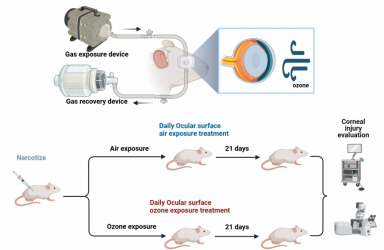
Research flowchart of this study
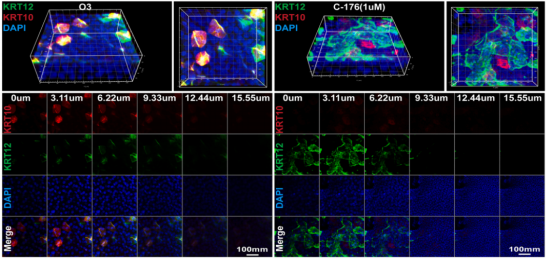
Representative research results in this article