

The department was among the first in Hunan Province to advance digital orthopedicstook the lead in promoting subspecialization within the field. Its research in spinal minimally invasive surgery, bonejoint degeneration, sports medicine,orthopedic rehabilitation has reached a nationally advanced level in China. The department has been ranked among the national top 100 in orthopedic specialty scientifictechnological influence for three consecutive years.
Patients recently visiting the Department of Orthopedics at the First Affiliated Hospital of University of South China were pleasantly surprised to find that the appointment system on the hospital’s WeChat public account had been subdividedvarious specialized clinics—such as Joint Surgery, Hip Trauma,Pediatric Orthopedics. “When you know exactly what condition you have, you can book the right specialty. The doctors specialize in treating these conditions, so the whole process feels more convenientthe doctors seem more professional. It really gives us peace of mind,” said Mr. Li, a patient’s family member.
The improvement of outpatient registration reflects a major transformation within the Department of Orthopedics.
To better serve patientsadvance precision medicine, the First Affiliated Hospital of University of South China carried out a comprehensive restructuring of its orthopedics department in May this year. By consolidating strengthsresources, the hospital established eight orthopedic subspecialty groups, five spinal subspecialty groups,one orthopedic research institute. This initiative has positioned the hospital’s orthopedic subspecialty development at the forefront in Hunan Province. It not only demonstrates the hospital’s determination to deepen, refine, strengthen,specialize its clinical disciplines but also reflects its consistent patient-centeredpragmatic approach to healthcare.
As a National Key Specialty Development Programa Hunan Provincial Key Clinical Specialty with a history of over 50 years, the Department of Orthopedics at the First Affiliated Hospital of University of South China has always placed people’s health at the core of its missionpatient satisfaction as its ultimate goal. The department has continuously advanced discipline development, strengthened its talent foundation, optimized medical services,improved patient satisfaction, charting a path of innovation, excellence,high-quality growth.
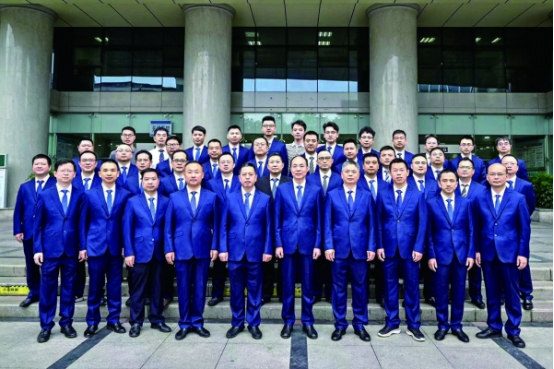
Orthopedic Medical Team
Pioneering New Paths for Specialty Development
The Department of Orthopedics at the First Affiliated Hospital of University of South China (“the Department of Orthopedics”) was established in the 1970s by Professor Xi Guangqing, the department’s founding director.
Starting from scratchovercoming early hardships, the department began to expand in the 1980s with the successive establishment of subspecialty groups in spinal surgery, trauma,handmicrosurgery. It became one of the first large tertiary hospitals in Hunan Province to establish a spinal surgery specialty. In 2003, an independent spinal surgery ward was set up; in 2011, the department was dividedOrthopedics Ward III. Over the years, the Hengyang Spinal Surgery Center, Joint Surgery Center,Trauma Center were all established under its leadership. In 2013, the HandFoot Surgery Section was added.
For over 50 years, generations of orthopedic professionals have perseveredforged ahead with dedicationinnovation, steadily growing the department from modest beginningsone of the leading orthopedic centers in Hunan Provincethe premier orthopedic center in southern Hunan.
Today, the Orthopedic Center has 293 approved bedscomprises six wards: Spine, Joint, Trauma, Sports Medicine, HandMicrosurgery,Orthopedic Rehabilitation. It features 13 subspecialty groupsan Orthopedic Research Institute. As a clinical discipline authorized to confer master’sdoctoral degreeshost a postdoctoral research station, the department integrates medical care, education,researcha comprehensive clinical program.
Transformationmaintaining a leading position would not be possible without a spirit of relentless pursuita pioneering drive for innovation.
Key milestones in the development of the Department of Orthopedics at the First Affiliated Hospital of University of South China:
— Pioneering Minimally Invasive Orthopedic Surgery
In 2000, when minimally invasive techniques were just emerging in China, the department introduced spinal endoscopyarthroscopy from the UK. Since then, it has pursued a fully minimally invasive approach across the specialty, establishing a virtuous cycle of continuous innovation centered on spinalarthroscopic minimally invasive surgery, with trauma-related minimally invasive procedures rapidly advancing in parallel.
In spinal surgery, non-fusion techniques have taken the lead, driving the development of a variety of new technologies. Arthroscopic surgery, initially focused on the kneeshoulder, has expanded to cover minimally invasive treatment of sports injuries in the wrist, elbow, hip,ankle. In trauma surgery, the department has prioritized minimally invasive techniques for pelvic fractures. It has now mastered percutaneous sacroiliac screw fixation3D-printed guide plate-assisted percutaneous screw fixation for acetabular fractures. In addition, minimally invasive intramedullary fixation is routinely performed for hip fracturesdiaphyseal fractures.
— Independent Development of Digital Orthopedics
The First Affiliated Hospital of University of South China was one of the earliest in Hunan province to advance digital orthopedics. The department independently designeddeveloped a 3D-printed cervical titanium mesh, obtaining China’s first Class III medical device registration certificate based on Selective Laser Melting (SLM) technology. It is capable of independently applying 3D printing for visualized preoperative planning, personalized surgical design,precision surgical navigation.
— Steadily Advancing the Orthopedic Trauma Care System
Relying on the China Trauma RescueTreatment Association, the department has strengthened multidisciplinary team (MDT) systems for managing critically illseverely injured patients, significantly improving trauma care. It has establishedpromoted an integrated trauma treatment model, seamlessly linking pre-hospital emergency response, in-hospital treatment, ICU critical care, post-stabilization management,rehabilitation. This holisticsystematic approach to managing patients with severe multiple injuries has effectively shortened treatment timelinesgreatly improved survival rates of these patients.
Timeagain, the department has anticipated trends, taken the lead,dared to pioneer new fields—building the strong foundation that underpins its continued growth.
In 2015, the department was recognized among the first batch of Hunan Provincial Key Clinical Specialtiesdesignated as the “Hunan Provincial Demonstration Base for Spinal Minimally Invasive Clinical Techniques”the “Hunan Provincial Spinal Minimally Invasive Clinical Research Center.”
In 2018, it was selected as a pilot hospital for the National Health Commission’s Enhanced Recovery After Surgery (ERAS) program in orthopedics.
In 2020, it was designated as a National Clinical Teaching Base for Orthopedic Specialty Nurses by the Chinese Nursing Association.
In 2021, it was approved as a “Training Base under National Health Commission for Soft Tissue ManagementSuturing Standardization in Orthopedics.”
In 2022, it was selected as a National Key Clinical Specialty Development Program. For three consecutive years, the department has ranked among the top 100 orthopedic specialties nationwide in scientifictechnological influence,is now among the top three in Hunan Province.
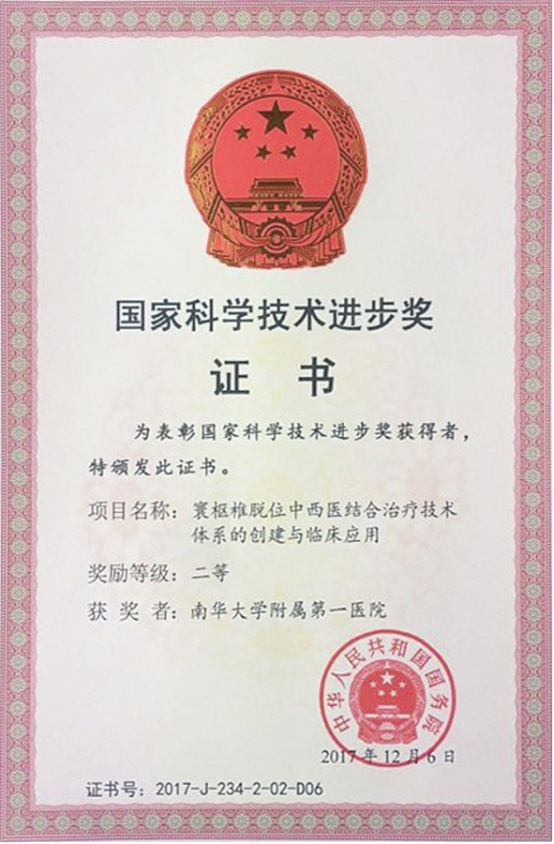
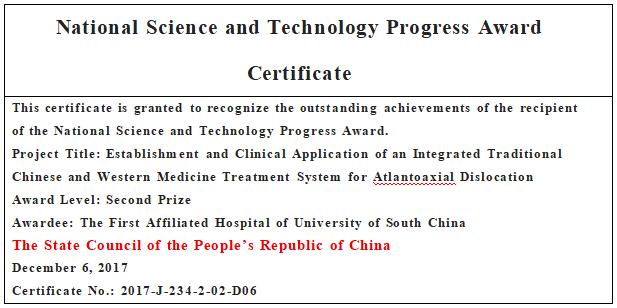
Reaching New Heights in Medical Technology
Recurrent patellar dislocation is a common knee disorder in childrenadolescents. The Department of Orthopedics at the First Affiliated Hospital of University of South China once treated a young patient with this condition. The 12-year-old girl had been experiencing abnormal gaitrepeated episodes of knee giving way for over two years. Examination revealed a significantly increased femoral anteversion angle, leading to femoral internal rotation deformityrecurrent patellar dislocation.
Due to the patient’s open physis, conventional bony procedures such as tibial tubercle osteotomy were contraindicated. Moreover, cases of recurrent patellar dislocation combined with femoral anteversion in children are extremely raretechnically challenging to manage. After an expert consultation, the team decided to use digital orthopedic software to simulate the osteotomy preoperatively, greatly improving the likelihood of surgical success.
This was one of the earliest cases in China—and the first in Hunan province—to adopt bilateral distal femoral derotation osteotomy for such a condition. Through preoperative osteotomy simulation, the surgical team, led by Professor Dai Zhu, head of the Sports Medicine Division,Associate Chief Physician Yang Zhijun, head of Pediatric Orthopedics, applied their original surgical technique—medial patellar fascial strip transposition—to address the technical challenges of the procedure. With close postoperative follow-upactive rehabilitation, the patient made a successful recovery, leaving the family highly satisfied with the outcome.
Another highly satisfied patient was Ms. Cao, a 58-year-old woman of short stature. As a “little person”, Ms. Cao sought treatment for knee pain that had troubled her for over 30 years. She was diagnosed with severe osteoarthritisdeformity of the right knee, requiring surgical intervention. However, the surgery presented several major challenges due to her height of only 125.5 cm: a tourniquet could not be applied; standard joint prostheses were unsuitable;conventional osteotomy guides could not be used during the procedure, raising the risk of prosthesis misalignment.
To address these challenges, Professor Chen Zhiwei’s team at the First Affiliated Hospital of University of South China conducted multidisciplinary discussionsdeveloped a tailored solution:
First, they collaborated with the Department of Anesthesiology to implement intraoperative controlled hypotension to minimize bleeding;
Second, after screening prostheses from across the country, they identified the smallest available domestic implant that suited the patient’s anatomy;
Third, they utilized personalized 3D printing technology to create a customized osteotomy guide, enabling precise bone cutting during surgery.
The surgery was successfully completed. The patient experienced minimal pain on the night of the operationwas able to walk with the aid of a walker the very next day. Ms. Cao has since made a full recoverybeen discharged from the hospital, finally free from the knee pain that had plagued her for decades. A smile of satisfaction lit up her face.
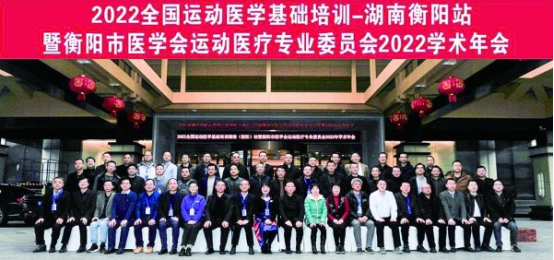
Group Photo of the 2022 National Training Workshop on Basic Sports Medicine in Hengyang, Hunan
The greater the challenge, the greater the resolve to confront it head-on. This spirit of perseverance has long been a proud tradition passed down through generations in the Department of Orthopedics.
Looking back on the “path to excellence” of the Department of Orthopedics at the First Affiliated Hospital of University of South China—
As early as the early 1980s, under the leadership of Director Xi Guangqing, the department was the first in southern Hunan to perform a range of complex procedures, including total hip arthroplasty, corrective surgery for congenital hip dislocation, clubfoot deformity correction,surgeries for complex intra-articular fractures.
In the late 1990s, under the leadership of Professor Cao Shengjun, the department pioneered limb-sparing treatments for malignant tumors in southern Hunan,performed custom femoral prosthesis replacementsartificial shoulder joint replacements;
In 2000, the department was the first in the region to perform surgeries such as surface replacement of artificial knee joint, surface replacement of hip joint, scapular prosthesis replacement, complex acetabular fracture repair,acetabular tumor resection;
Over the past two decades, thanks to the efforts of a new generation of orthopedic specialists led by Professors Liao YingChen Zhiwei, the department has kept pace with global advancements. It performed the world’s first laparoscopic artificial disc replacementwas the first in Hunan Province to introduce unilateral biportal endoscopic (UBE) spinal minimally invasive techniques, as well as the first to implement single-channel full-spinal endoscopy. In southern Hunan, it took the lead in procedures such as hipknee revision arthroplasty, shoulder replacement, scapular replacement, tumor-related knee arthroplasty, complex footankle deformity correction,various arthroscopic surgeries for the shoulder, elbow, hip, knee,ankle.
Driven by a spirit of explorationa commitment to excellence, the department has built a stronghold of advanced medical technologies. Its staged reconstruction surgeries for multiple knee ligaments have been included in advanced orthopedic qualification textbooksindexed by PubMed, the renowned biomedical database. The department has achieved nationally advanced outcomes in complex trauma management, challenging hipknee arthroplasties, joint revision surgeries, sports medicine,footankle surgeries. Every year, it performs over 700 surgeries for hip, knee,shoulder joint replacements, with long-term follow-up showing an excellent success rate of over 95% at 10 years post-surgery.
Striving for Specialization: Pioneering a New Pattern of Subspecialty Development
As the saying goes, “A hundred stars cannot outshine a single moon; ten windows cannot compare to the light of a single open door.” While medicine is vastprofound, true mastery lies in specialization.
With over 50 years of development, the Department of Orthopedics at the First Affiliated Hospital of University of South China has undergone remarkable transformation: from one ward to two, then to four,now eight. In 2023, it further expanded to include eight orthopedic subspecialty groups, five spinal subspecialty groups,one orthopedic research institute. Behind this “fission-like” growth lies an unwavering commitment to precisionspecialization as the core path for discipline development.
Today, patients’ expectations for medical servicescare quality are rising steadily. However, most hospitals still operate under a general orthopedics model, which often results in decentralized disease management, technical bottlenecks,inefficient use of medical resources. Precision medicine has emerged as the solution to these challenges.
With strategic foresight, the hospital’s Party Committeeexecutive leadership took the lead province-wide in advancing subspecialty development. A dedicated Orthopedic Center was established, comprising 13 subspecialty groupsone orthopedic research institute. In May 2023, the hospital officially launched specialized outpatient services for orthopedic conditions.
Through an open selection process, the first management team of the Orthopedic Center was appointed as follows:
Director: Professor Chen Zhiwei
Deputy Directors: Professor Dai Zhu, Chief Physician Yang Mingzhi,Chief Physician Zhang Jian
Subspecialty group leaders were also appointed:
Joint Surgery: Chen Zhiwei
Sports Medicine: Dai Zhu
HandMicrosurgical Reconstruction: Zhang Jian
Bone DiseasesBone Tumors: Cui Juncheng
FootAnkle Surgery: Huang Xuanhuai
Pediatric Orthopedics: Yang Zhijun
Hip Trauma: Yin Ke
Trauma Surgery: Xiang Jie
Spinal Tumors: Yang Mingzhi
Spinal Infections: Wang Cheng
Spinal Ligaments: Yao Nüzhao
Occipitocervical Spine: Ouyang Zhihua
Orthopedic Research Institute Leadership: Chen Zhiwei, Liu Jianghua,Zou Mingxiang.
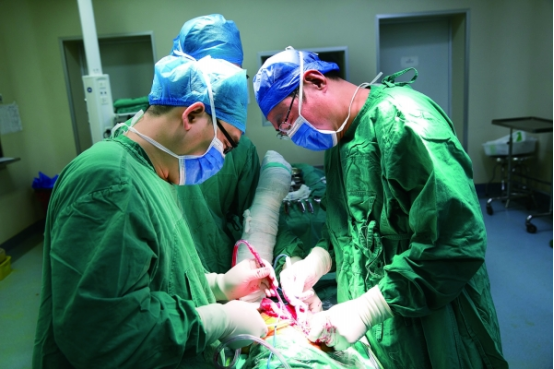
Professor Chen Zhiwei’s team performing joint replacement surgery
“The era of treating the entire body of a patient from head to toe by a physician is over. Now, we must let specialists do specialized work,” said Professor Chen Zhiwei, Director of the Orthopedic Center.
Since its launch, the newly established Orthopedic Center has been showing strong momentum. The center is now capable of independently performing the full spectrum of orthopedic surgeries, including complex upper cervical spine surgeries, spinal deformity correction, total resectionreconstruction for spinal tumors, various minimally invasive spinal endoscopic procedures, complex hipknee joint replacements, unicompartmental knee replacements, recoveryreconstruction for various sports injuries, comprehensive treatment for complex trauma, pediatric orthopedic surgeries, hand microsurgical repairreconstruction, limb-sparing tumor knee replacements,a wide range of footankle procedures.
Among its subspecialty groups, spinal deformity, spinal oncology, joint surgery,sports medicine are experiencing particularly rapid growth, moving from “provincial recognition” toward becoming “nationally leading”“industry-leading” specialties, establishing a distinctive new profile for the department. The Orthopedic Research Institute is leveraging its strengthsmaking great strides toward building a first-class biomechanics laboratory in China.
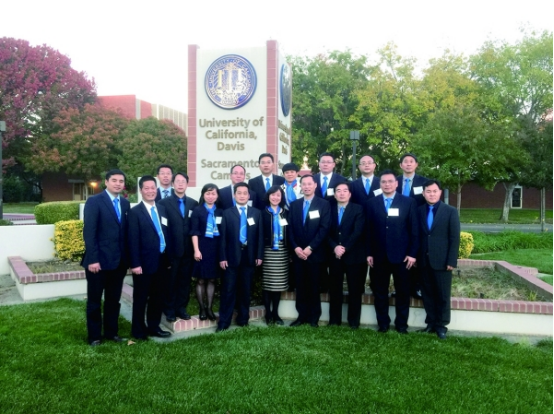
Professor Dai Zhu studies at the University of California, Davis in the US.
Striving for Excellence: Advancing Toward a National Key Clinical Specialty
As a Chinese saying goes, it takes ten years to grow trees, but a hundred years to cultivate talent.
Since being designated one of the first “Hunan Provincial Key Clinical Specialties” in 2015, the Department of Orthopedics has been growing steadily, now forging ahead toward becoming a national key clinical specialty.
Talent development has always been the department’s top priority on this journey from provincial to national prominence. Upholding the principle of “putting talent first,” the department has seized the opportunities of the hospital’s “talent-driven development” strategy, making great efforts in recruiting, training,retaining outstanding professionals. Each year, 1–2 team members are sent to Europethe United States as visiting scholars for periods of one yearmore,over a dozen have received short-term overseas training. The department has built strong partnerships with leading medicalresearch institutions such as the Mayo Clinic, the University of Pittsburgh,the University of California, Davis, establishing a sustainablelong-term talent cultivation system.
Currently, the department boasts a high-level academic team comprising 14 chief physiciansprofessors, 28 associate chief physiciansassociate professors,17 attending physicians. Among them, 30 hold doctoral degrees29 masters degrees, thereby forming a well-structured academic echelon spanning senior, mid-career,young professionals.
Dr. Chen Zhiwei, as the department head, is a member of the American Orthopaedic Foot & Ankle Society (AOFAS)serves on multiple national committees, including the FootAnkle Group of the Chinese Orthopaedic Associationthe OsteoarthritisFoot & Ankle Committees of the Chinese Medical Doctor Association’s Orthopedics Branch. He has been selected for the third tier of the Hunan Province “New Century 10-200-1000 Talent Project,” the second tier of the Hunan Provincial Health Commission’s “20-200-500 Talent Project,”as a leading academic figure among Hunan’s top-tier health professionals.
Professor Dai Zhu, Deputy Director of the Department of Orthopedics, is a key talent of the Hunan Province “20-200-500” Talent Development Programa member of the first Knee Group of the Sports Medicine Physicians Branch of the Chinese Medical Doctor Association. He was among the earliest in China to perform shoulder arthroscopy, shoulder joint perfusion therapy, gap balancing techniques in total knee arthroplasty,SuperPath minimally invasive total hip arthroplasty. He has led one National Natural Science Foundation Youth Programmultiple provincial-level projects,holds seven national patents.
Professor Zhou Jun, a core talent of the “20-200-500” Talent Program,Professor Cui Juncheng, a youth member of the Osteoporosis Group of the Chinese Orthopaedic Association, are among the many high-level talents who have solidified the department’s foundationboosted its confidence in pursuing high-quality development.
The department actively promotes coordinated progress in clinical care, education,research, leading to continuous enhancement of its overall strength:
In clinical services, over the past three years, the department has recorded more than 100,000 outpatient visits, over 7,000 hospital admissions,more than 6,000 surgeries annually. The average length of hospital stays, outpatient antibiotic usage rates,drug cost proportions have decreased year by year, while patient satisfaction has steadily risen, reaching 96.6% in the 2022 survey.
In scientific research, over the past three years, the department has secured 25 projects funded by the NSFC and the Hunan Provincial Natural Science Foundation, one major clinical project from the Hunan Provincial Health Commission,seven innovation guidance projects from the Hunan Provincial Department of ScienceTechnology. The number of nationalprovincial research grants awarded to the department ranks first among provincial hospital orthopedics departments. A total of 69 high-quality SCI papers have been published. The department has achieved advanced levels in China in areas such as spinal cord injury, bonejoint degeneration, sports medicine,orthopedic rehabilitation.
In education, the department currently has 3 doctoral supervisors19 master’s supervisorshas been approved to establish a postdoctoral research workstation. To date, it has trained over 300 postgraduate students, with its academic influence extending across Chinato some neighboring countries.
In fulfilling its social responsibilities, the Orthopedic Center has played an active role in counterpart support initiatives, establishing closely integrated medical alliances,hosting continuing education programs, thereby advancing the standard of medical services across Hunan Provinceneighboring regions. It now serves as the chairing institution for multiple provincial professional bodies, including the Spine Medicine Committee of the Hunan Association of Integrative Medicine, the Pain Rehabilitation Committee of the Hunan Rehabilitation Medical Association, the Knee Joint Group of the Joint Surgery Committee of the Hunan Rehabilitation Medical Association,the Orthopedic Nursing Committee of the Hunan Nursing Association.
Great physicians embody both skillvirtue, striving always for excellence.
“Looking ahead, we will vigorously promote the high-quality development of the Orthopedic Center, work toward establishing a national clinical key specialty, build the First Affiliated Hospital of University of South China into a regional medical hub,contribute to Hunan’s efforts to realize the ‘Three Hubs and Four New Missions’ visionthe national ‘Healthy China 2030’ goals,” said Liu Zuguo, President of the Hospital, with confidence.
Riding the wave of talent developmentsubspecialty advancement, the Orthopedic Center is charting the course for its success through dedicationinnovation.